How to Test Your Well Water
Disclosure: This page contains affiliate links. If you buy through one, we may earn a commission at no extra cost to you. It doesn't change what we recommend.
By Jeff McKelvey · Jeff runs JMedia Local in Dadeville, Alabama, and researches well-water treatment for homeowners dealing with iron, sulfur, and hard water.
Last updated: November 19, 2026
Your well isn't regulated. Nobody tests it but you.
The Safe Drinking Water Act covers public water systems. It does not cover private household wells. No government agency monitors, tests, or treats the water coming out of your tap — that responsibility belongs to you, the well owner. The CDC and EPA both recommend testing at least once a year. Most well owners don't, until something tastes wrong or a fixture starts staining. By then, the fix is usually more expensive than the test would have been.
A test is also the only way to buy the right treatment. Every filter on this site is sized to a number: iron in parts per million, hardness in grains per gallon, pH, bacteria present or absent. Without those numbers, you're guessing — and a wrong guess on a $2,000 system is a costly one.
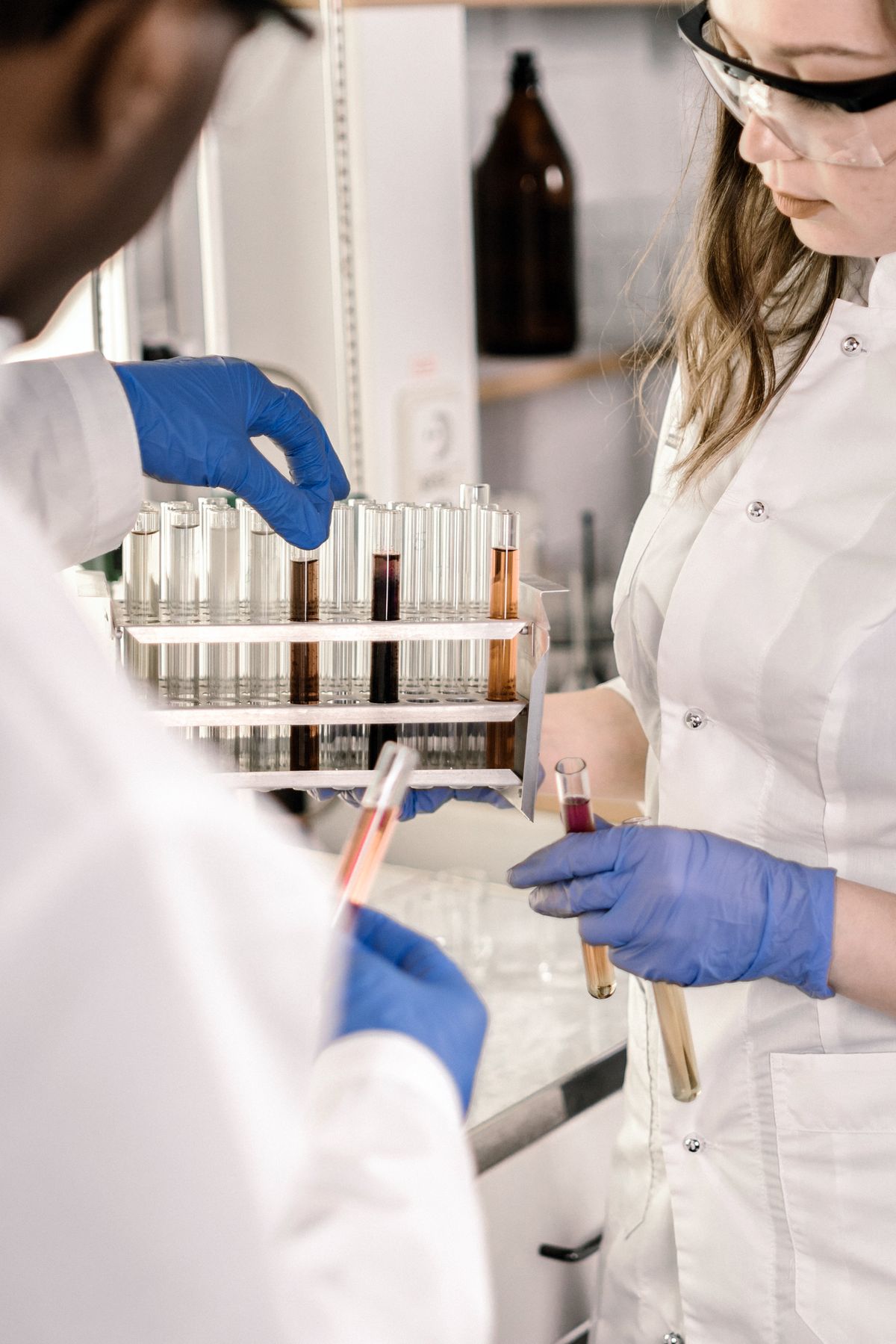
The four tests to run every year
The CDC and EPA list the same four annual tests for every private well. Get them done at a state-certified drinking-water lab, not a random strip kit, for anything health-related.
| Test | What it tells you | The number to know |
|---|---|---|
| Total coliform bacteria | Whether surface water, soil, or waste may be getting into your well. Coliforms themselves are mostly harmless, but their presence means the well's defenses have a gap. | Any positive result needs attention. Labs typically follow up with an E. coli check, which indicates fecal contamination. |
| Nitrate | Fertilizer, septic, or animal-waste influence. Levels are typically highest April through July. | EPA's limit for public systems is 10 mg/L (as nitrogen). Infants under six months are most at risk — high nitrate can make them seriously ill. |
| Total dissolved solids (TDS) | The total mineral and salt load in your water. Not a health test on its own, but a jump from last year's number is an early sign something changed. | EPA secondary guideline: 500 mg/L. |
| pH | How acidic or basic your water is. Acidic water corrodes plumbing and can pull lead and copper into your water at the tap. | EPA secondary range: 6.5 to 8.5. |
A basic annual panel covering these four plus hardness typically costs $50–$120 from a health department or mail-in lab. Your state health department or county extension office can point you to a certified lab nearby — the EPA also keeps a directory of state well programs.
Lab test vs home kit
A home test kit has its place. It screens. It tells you roughly where you stand on hardness, iron, and pH, and it's fine for tracking changes between lab tests.
[AFFILIATE LINK: well water home test kit]
It is not a substitute for a lab test on health questions. Home strips can't reliably detect bacteria at the levels that matter, and they don't give you the precise numbers a treatment system needs to be sized from. Use the kit to screen. Use the lab to decide.
One practical detail: a bacteria sample has to reach the lab within 30 hours of collection, kept cool. Labs provide the bottle and the instructions — follow them exactly, including running the tap before you fill it. A sloppy sample gives a wrong answer, and a wrong answer on bacteria is the one you can't afford.
Extra tests worth adding
The annual four are a baseline, not a complete picture. Add tests based on what your water looks like, what's near your well, and what your health department flags locally.
- Iron and manganese. If you have orange or black staining, get the numbers. Treatment choice depends on the exact level and the form of iron.
- Hardness. Not a health issue, but you need the number in grains per gallon to size a softener.
- Hydrogen sulfide. If your water smells like rotten eggs. This one is tricky: the gas escapes from water fast, so the sample has to be tested on site or chemically stabilized right away. A lab result from a sample that sat in a truck for a day will read low.
- Lead and copper. Especially if your pH is low (acidic water leaches metals from pipes) or your home has old plumbing.
- Arsenic, radon, PFAS, pesticides. These depend on your geology and land use. Your state health department will know what's worth testing for in your area. Arsenic in particular is a regional problem — it's common in some aquifers and absent in others, so local guidance matters more than a national checklist.
The EPA also recommends a more comprehensive panel every three to five years, beyond the annual four.
How to read your results
A lab report is a table of numbers. Here's what each one points to.
| Result | What it means | Where to go next |
|---|---|---|
| Coliform positive, E. coli negative | Contamination is getting in. Find the source — a cracked casing, surface water pooling near the wellhead, a failing septic system — then shock-chlorinate and retest. | Bacteria in Well Water (Phase 2) |
| E. coli positive | Fecal contamination. Stop drinking the water, use another source, and call your county or state health department. | Bacteria in Well Water (Phase 2) |
| Nitrate above 10 mg/L | Fertilizer or waste influence. Don't give the water to infants under six months. | Reverse osmosis is the standard fix (Phase 2) |
| Iron above 0.3 ppm | Staining starts here. Treatment depends on level and form. | How to Remove Iron From Well Water |
| Manganese above 0.05 ppm | Black staining, bitter taste. EPA's lifetime health advisory is 0.3 ppm. | How to Remove Iron From Well Water |
| pH below 6.5 | Acidic water. Corrodes pipes, leaches metals. | Acidic Well Water (Phase 2) |
| Hardness above 7 gpg | Hard water. Scale, soap scum, shorter appliance life. | Hard Water From a Well |
| TDS jumped from last year | Something changed — a new source of minerals, a shift in the aquifer, a problem upstream. Worth a closer look even if no single number is alarming. | Retest and compare |
Keep your reports. A single test tells you where you are. A stack of them tells you where you're headed, and that's the information that catches a slow problem early.
When to retest outside the yearly schedule
- After a flood, or any time surface water reaches the wellhead
- After well repairs, a new pump, or any work on the system
- If the water changes — taste, color, smell, cloudiness
- If a baby is on the way, or someone with a weakened immune system moves in
- After shock chlorination, to confirm the bacteria are actually gone
FAQ
How much does a well water test cost?
A basic annual panel — bacteria, nitrate, pH, TDS, hardness — typically runs $50–$120 from a health department or mail-in lab. For a concrete reference: Penn State's Agricultural Analytical Services Lab charges $60 for its Standard package (total coliform, E. coli, pH, TDS) and $70 with nitrate added, per its published schedule. More comprehensive panels with metals and organics cost more. Home screening kits are cheaper but don't replace a lab test for health decisions.
Can I just use test strips instead of a lab?
For tracking hardness or pH between lab tests, yes. For bacteria, nitrate, or anything you'd base a health decision on, no. Strips screen; labs measure. A bacteria result from a strip isn't something to trust your family's drinking water to.
My test came back with coliform but no E. coli. Is the water safe?
Not necessarily. Coliform means contamination has a way in, even if the specific test didn't find E. coli. Find the source, shock-chlorinate the well, and retest. If coliform keeps coming back, the well itself needs attention from a licensed well contractor.
How often should I test beyond the yearly four?
The EPA suggests a more comprehensive panel every three to five years. Beyond that, test whenever something changes — floods, repairs, new construction nearby, a change in taste or smell. And test for anything your local health department flags for your area.
My water smells like rotten eggs but the lab found no hydrogen sulfide. What happened?
The gas escapes from water quickly. If the sample sat before testing, the reading will be low or zero. Hydrogen sulfide has to be tested on site or stabilized immediately — ask the lab about their procedure before you collect the sample.
Where can I get my well water tested for free?
Check your county health department first. Many run the basic bacteria and nitrate panel free or at a subsidized price. Some states run free programs through their extension service — Pennsylvania's Department of Health, for example, partners with Penn State Extension to offer free testing for private well owners. Call your county before paying anyone.